
A Roth IRA is more than just a retirement savings vehicle—it can be a versatile tool that serves multiple financial goals when used wisely. From tax-free growth to penalty-free withdrawals under certain conditions, this unique account offers flexibility that few other retirement options provide. However, just like any powerful tool, it must be handled with care. Malachi 2:15 reminds us to “be on your guard”—a principle that applies not only to our relationships but also to the stewardship of our financial resources. While a Roth IRA can offer solutions beyond retirement, withdrawing funds too soon or misusing its benefits could impact your future security. Today, let’s dig into the ways a Roth IRA can serve multiple objectives and how to approach it with wisdom and caution.
Used with care, the Roth IRA may help serve several objectives at once — like a multipurpose tool in your financial-planning toolbox.
Retirement
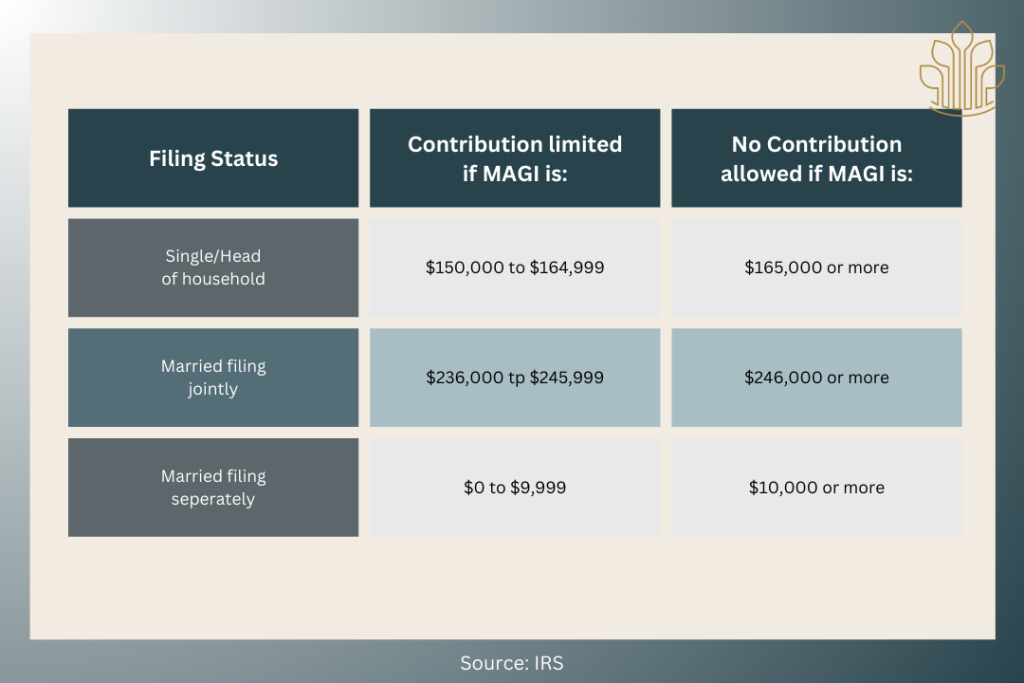
First and foremost, a Roth IRA is designed to provide tax-free income in retirement. If your modified adjusted gross income (MAGI) falls within certain limits, you can contribute up to $7,000 ($8,000 for those age 50 or older) in earned income to a Roth IRA in 2024 and 2025. Although Roth IRA contributions are not tax-deductible, qualified withdrawals are tax-free. A qualified withdrawal is one made after the account has been held for at least five years and the account owner reaches age 59½, becomes disabled, or dies. Nonqualified withdrawals of earnings are subject to ordinary income taxes and a 10% penalty, unless an exception applies.
2025 Income Limits for Roth Contributions
Emergency savings
Because contributions to a Roth IRA are made on an after-tax basis, they can be withdrawn at any time — which means, in a money crunch, you could withdraw just your Roth contributions (not the earnings) free of taxes and penalties. In addition, account holders may withdraw up to $1,000 in earnings each year to cover emergency expenses.1
Teachable moments
A Roth IRA can also be an ideal way to introduce a working teen to long-term investing. Minors can contribute to a Roth IRA as long as they have earned income and a parent or other adult opens a custodial account in their name. Alternatively, an adult can contribute to a Roth IRA within a custodial account on a child’s behalf, as long as the total amount doesn’t exceed the child’s total wages for the year.
College and first home
Roth IRA earnings can be withdrawn penalty-free to provide funds for college and the purchase of a first home.
College. Roth IRA funds can help pay for certain undergraduate and graduate costs for yourself or a qualified family member. Expenses include tuition, housing and food (if the student attends at least half time), fees, books, supplies, and required equipment not covered by other tax-free sources, such as scholarships or employer education benefits. An advantage of using a Roth IRA to help pay for college is that assets held in retirement accounts are excluded from the government’s financial-aid formula. (A related point: up to $35,000 in 529 plan assets that are not used to pay for college may be rolled over to a Roth IRA for the same beneficiary, provided certain rules are followed.)
First home purchase. Up to $10,000 (lifetime limit) can be used for qualified expenses associated with a first-time home purchase. You are considered a first-time home buyer if you haven’t owned or had interest in a home during the previous two years. Funds may be used for acquisition, construction, or reconstruction of a principal residence and must be used within 120 days of the distribution. If the account has been held for at least five years, the distribution will be income tax-free as well.
Estate planning
Roth IRAs are not subject to the age-based required minimum distribution rules that apply to non-Roth retirement accounts during your lifetime. For this reason, if you don’t need your Roth IRA funds, they can continue to accumulate. After your death, the tax-free income benefit continues to apply to your beneficiaries (however, the value of your Roth IRA will be assessed for federal and possibly state estate tax purposes).
Proceed with caution
Although it’s generally best to avoid tapping money earmarked for retirement early, the Roth IRA can help serve multiple needs — if used wisely.
In the Word
Has not the one God made you? You belong to him in body and spirit. And what does the one God seek? Godly offspring. So be on your guard, and do not be unfaithful to the wife of you youth.
Malachi 2:15
At Stone Oak Wealth, we believe in the power of family to instill values of moral maturity, emotional stability, and spiritual fulfillment.
Our mission is to guide families in creating a legacy of faith and righteousness, ensuring that future generations continue to live and worship in alignment with God’s will. Strive to cherish and protect family time, fostering an environment where love and faith can flourish.
Together, we can build a future that honors our spiritual heritage.

1) Due to ordering rules, Roth IRA contributions will always be distributed before earnings.
Sources: Broadridge Investment Management Solutions
Stone Oak Wealth is regulated by the SEC as a registered investment adviser. Please see visit our Legal Disclosures webpage for additional advertising disclosures.
The content shared by Stone Oak Wealth is information to help users become financially literate. It is neither tax nor legal advice, is not intended to be relied upon as a forecast, research or investment advice, and is not a recommendation, offer or solicitation to buy or sell any securities or to adopt any investment strategy. Tax, investment and all other decisions should be made, as appropriate, only with guidance from a qualified professional. We make no representation or warranty of any kind, either express or implied, with respect to the data provided, the timeliness thereof, the results to be obtained by the use thereof or any other matter.
Stone Oak Wealth Management does not provide tax advice and a qualified tax accountant should be consulted.
The tax implications of a 529 savings plan should be discussed with your legal and/or tax professional because they can vary from state to state. Also be aware that most states offer their own 529 plans, which may provide advantages and benefits exclusively for their residents and taxpayers. These other state benefits may include financial aid, scholarship funds, and protection from creditors. Before investing in a 529 savings plan, please consider the investment objectives, risks, charges, and expenses carefully. The official disclosure statements and applicable prospectuses, which contain this and other information about the investment options, underlying investments, and investment company, can be obtained by contacting your financial professional. You should read these materials carefully before investing.